Doctor Snow
The Knife of Never Letting GoDoctor Snow is both a physician and the head of the council of eldermen, and his two roles meet at moments when Todd’s health and the town’s safety are in question. First he approaches Todd as a patient, assessing a sickness that had left the boy unconscious and without Noise. Later, amid an armed dispute over whether Todd and Ben are spies, he weighs the danger of holding them against the danger approaching the town and decides to let them go.
Identity and First Appearance
Doctor Snow enters Todd’s room through a door that opens by itself, with his Noise preceding him. Todd sees a tall, broad man with glasses that make his eyes appear prominent, a flip in his hair, and a crooked smile. The impression that matters most to Todd, however, is the relief and joy coming through the doctor’s Noise: it is so strong that Todd struggles to remain where he is. His response establishes Doctor Snow as an unexpected source of reassurance at a moment when Todd has just lost someone and cannot find words for the loss.
Viola recognizes the newcomer as Doctor Snow and moves off the bed to make room. He greets Todd as someone he has been hoping to meet, then sits beside him and takes a medical instrument from his shirt pocket. Without first asking, he places its ends in his ears and the other part against Todd’s chest. The practical, direct manner of the examination introduces a man who responds to uncertainty by attending to the immediate condition of the person before him.
Medical Attention to Todd
Doctor Snow asks Todd to breathe deeply and listens at more than one place on his chest. Todd complies, discovering that he can draw a full breath down into his lungs. That physical change offers a concrete measure of improvement after a period in which he had been seriously ill. The examination is not presented as a distant report: Todd experiences the regained breath as the doctor checks him.
Doctor Snow explains that Todd had been very sick and unconscious, and that recovery had not been certain. He notes that Todd had not been giving off Noise until the day before, and that he has not encountered this kind of sickness for a long time. He also says he has not heard of a Spackle attack for a very long time. These observations link Todd’s condition to a rare danger while stopping short of providing a fuller medical explanation. The doctor’s knowledge is significant because his diagnosis confirms the seriousness of what Todd has endured, even as the narrative leaves the illness’s details largely unelaborated.
Authority and Dispute
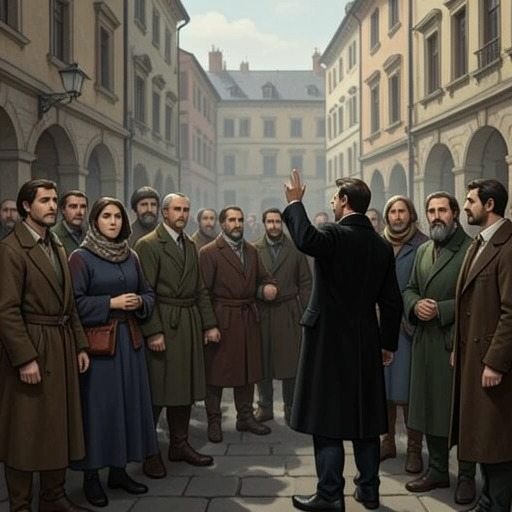
Doctor Snow’s authority becomes explicit during the confrontation over Todd and Ben. When one of the men challenges his account that Todd had been sick and unconscious, Doctor Snow turns to him and reminds him that he is speaking to the head of the council of eldermen. Another man, addressed as Jackson, rejects the idea that the newcomers should be trusted, calls Ben a traitor and murderer, and raises a rifle toward him. Doctor Snow is therefore not merely a medical witness in this exchange: he has a recognized governing position in a community where suspicion has become armed and immediate.
The wider situation also shows how information about the approaching army has been received in the town. Viola tells Todd that people would not listen when she warned them, and that they began wanting to hear from him only after caravans of refugees appeared on the river road. The evidence does not establish that Doctor Snow personally dismissed Viola’s warning. It does, however, place his later decision within a town whose leaders have reason to fear the army and whose response to danger has been shaped by distrust and delayed recognition.
Decision and Narrative Role
As the confrontation develops, Todd reads Doctor Snow’s Noise and sees him calculating how long remains before the horses arrive, how much trouble Todd, Ben, and Viola might cause, and how much time they might lose. The decision is shown as deliberation rather than reflex: Doctor Snow considers the approaching threat and the practical costs of keeping the group there, then tells the others to let them go. When a man protests, he answers firmly that the town must be protected and that he has a son to keep safe; he also points out that the other man has a son to protect.
That choice does not erase the hostility in the room or settle the town’s broader danger. It does change what happens to the people under suspicion: Doctor Snow uses his standing to stop the confrontation from ending in further violence and permits them to leave. His concern for the town and for his son gives the order a personal as well as civic basis. Across the medical visit and the council dispute, he is defined by attention to consequences: first he tests whether Todd can breathe, then he acts on his estimate of what the armed standoff may cost. The contrast makes his authority consequential without making him an all-powerful protector; he can choose a safer course in this moment, but the danger outside the room remains.